Table Of Content
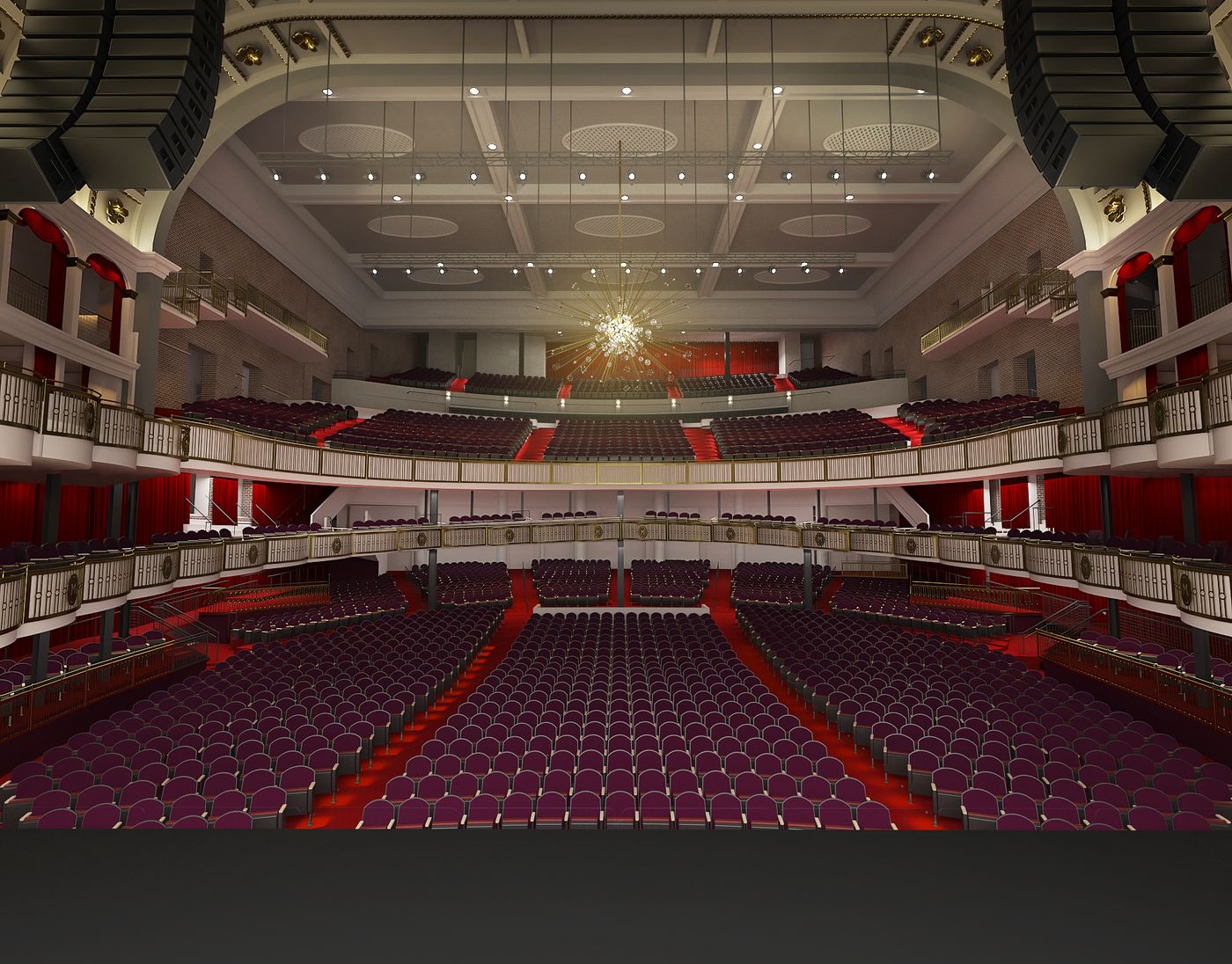
On May 25, PBS’s Great Performances television program, better known for filming and presenting what happens onstage at the Met, this time delves into the story of the building itself. It’s a documentary, by Susan Froemke—an editor of the legendary 1975 Grey Gardens—about the Met Opera as edifice, as cultural factory, as a force for social endorsement and upheaval. But even for those who don’t give a fig for the endless debate over whether Maria Callas was the greatest Carmen, the history of the Met Opera house is a compelling story. It’s full of egos so big— divas, operatic and otherwise, like city planner Robert Moses, John D. Rockefeller III, Philip Johnson, Leontyne Price—that it’s a wonder they could all fit on the Upper West Side. Many great conductors have helped shape the Met, beginning with Wagner’s disciple Anton Seidl in the 1880s and 1890s and Arturo Toscanini, who made his debut in 1908.
Edward Johnson
The Met orchestra, as always, was fabulous, particularly in the woodwinds and strings for this performance. And Minghella’s staging continues to show its worth as one of the most visually arresting productions on the Met stage – especially in Peter Gelb’s age of stark greys. With Cio-Cio-San and Pinkerton lifeless, the emotional core instead was filled by DeShong as Suzuki and Meachem as Sharpless. It was a relief every time DeShong was onstage, with her strong voice and dramatic presence, creating a fully realized Suzuki who cared for Butterfly but also was frustrated by her stubbornness.
What is the Met Gala dress code?
Planning for a new home for the Metropolitan Opera began as early as the mid-1920s, when the backstage facilities of the former house were becoming vastly inadequate for growing repertory and advancing stagecraft. As part of the development of the present-day Rockefeller Center site, there was to be a development with a new 4,000-seat opera house at its center. Financial problems and the following stock market crash of 1929 postponed the relocation of the Metropolitan Opera, and the complex became more commercial-based.
Lindemann Young Artist Development Program
Take a Backstage Tour of the Metropolitan Opera House - Untapped New York - Untapped New York
Take a Backstage Tour of the Metropolitan Opera House - Untapped New York.
Posted: Thu, 29 Feb 2024 08:00:00 GMT [source]
While Secretary of the Interior Stewart Lee Udall had determined the Metropolitan Opera House eligible for National Historic Landmark designation in December 1962—and despite the best efforts of “Save the Met”—the Metropolitan Opera Association, Inc. declined Landmark designation due to its plans to replace the opera house. Ultimately, it demolished the “Old Met” in 1967 as part of its construction of the current Metropolitan Opera House in the Lincoln Center of Performing Arts, which had opened the previous year, permanently preventing Landmark designation. Logan, in her third year with the program, made her Met debut as Clotilde in Bellini’s Norma, and sang the roles of Priestess in Verdi’s Aida during the 2022–23 season and Anna in Verdi’s Nabucco earlier this season. Cairns, in his second year of the program, was also a 2022 Grand Finals Winner of the Met’s Laffont Competition and made his company debut last season as the Messenger in Aida. Jones, who joins the program this fall, is also a member of the Denyce Graves Foundation’s inaugural Shared Voices program. Deborah Robertson, in her first year of the Lindemann Young Artist Development Program, will join the singers at the piano.

Everything is observed by “Dame Shirley”, the pen name of Louise Clappe, a doctor’s wife from Massachusetts who spent 18 months in the California mining camps and brought that world vividly and wittily to life in her letters home. Grigorian, along with an always-reliable Elizabeth DeShong as Suzuki, easily projected above the enormous sound of the Met orchestra, although Grigorian had some early slight wails in her upper register that mostly faded as she warmed into the performance. On the opening night, October 22, 1883, Christine Nilsson played the role of Marguerite in Faust before Iselins, Bakers, Goelets, Whitneys, Drexels, Morgans, Goulds, and Vanderbilts.
The classic Fifth Avenue hotel, composed of 189 sumptuous rooms and suites, has been a cornerstone of the New York luxury hotel scene since it opened in 1930, with guests including Coco Chanel, Audrey Hepburn and Elizabeth Taylor. More recently, it's played Met Gala dressing room host to Pedro Pascal, Emily Blunt, Jack Harlow, Kerry Washington, Emily Ratajkowski, Lady Gaga and Julianne Moore. It's a touch further downtown than the previous entries on this list, but is right on Fifth.
Satellite radio
The all-star principal quartet also features Ailyn Pérez as Micaëla and bass-baritone Ryan Speedo Green as Escamillo, with Diego Matheuz on the podium. Sponsorship of the Met broadcasts during the Depression years of the 1930s was sporadic. Early sponsors included the American Tobacco Company, and the Lambert Pharmaceutical Company, but frequently the broadcasts were presented by NBC itself with no commercial sponsor.[94] Sponsorship of the Saturday afternoon broadcasts by The Texas Company (Texaco) began on December 7, 1940, with Mozart's Le nozze di Figaro.
The Grand Tier opens two hours before every performance and you can even choose to enjoy your dessert during intermission and we will hold your table for a truly seamless experience. Here are a few things to keep in mind to make sure you get the most out of the unmatched onstage artistry—and the glamorous offstage scene. In 2006, the Met launched a groundbreaking commissioning program in partnership with New York’s Lincoln Center Theater to provide renowned composers and playwrights the resources to create and develop new works at the Met and at Lincoln Center’s Vivian Beaumont Theater. The first of these to reach the stage was Nico Muhly’s Two Boys, with a libretto by Craig Lucas, which opened at the Met in the fall of 2013. In her highly anticipated Met debut, Asmik Grigorian stars as Cio-Cio-San, the loyal geisha at the heart of Puccini’s devastating tragedy. Jonathan Tetelman is the callous American naval officer Pinkerton, alongside Elizabeth DeShong as Suzuki and Lucas Meachem as Sharpless.
As network radio waned, the Met founded its own Metropolitan Opera Radio Network which is now heard on radio stations around the world. In Canada the live broadcasts have been heard since December 1933 first on the Canadian Radio Broadcasting Commission[93] and, since 1934, on its successor, the Canadian Broadcasting Corporation where they are currently heard on CBC Music. Gelb began outlining his plans in April 2006; these included more new productions each year, ideas for shaving staging costs, and attracting new audiences without deterring existing opera-lovers. Gelb saw these issues as crucial for an organization which is dependent on private financing.
The Met stage has also been home to numerous world premieres of operas, including John Corigliano's The Ghosts of Versailles, Philip Glass's The Voyage and the US premiere of Nico Muhly's Two Boys in 2013. This rich mixture just about hangs together musically and dramatically, with only a few loose ends. Whatever the eventual fate of Girls of the Golden West in the opera houses of the world, it now has a definitive recording. By 1920, while still being used as a performing venue for operas, the house began presenting silent films to the public.[10] It remained a cinema venue after the MOH stopped presenting operas. In April 1922, J.F Rutherford gave the first radio broadcast from the Metropolitan Opera House to an estimated 50,000 people on the discourse "Millions Now Living Will never Die". Grigorian’s debut is all the more striking when you consider that the Met’s “Butterfly,” a gorgeously lacquered and mirrored staging by Anthony Minghella from 2006, is the kind of show that gets the least amount of rehearsal time in a repertory house.
When the opera company is on hiatus, the Opera House is annually home to the spring season of American Ballet Theatre. The theater was noted for its elegance and excellent acoustics and it provided a glamorous home for the company. Its stage facilities, however, were found to be severely inadequate from its earliest days.
Mrs. Paran Stevens was cautious and went to both the Metropolitan and the Academy that night. “There was a big crowd Monday night at the Metropolitan Opera House,” he wrote. The Goulds and Vanderbilts and people of that ilk perfumed the air with the odor of crisp greenbacks. When someone remarked that the house looked as bright as a new dollar, the appropriate character of the assemblage became apparent. To a refined eye, the decorations of the edifice seemed in extremely bad taste.” Nevertheless, the Academy of Music was doomed. Faced with this ultimatum, the Queen of Society, thinking only of the happiness of her daughter, surrendered.
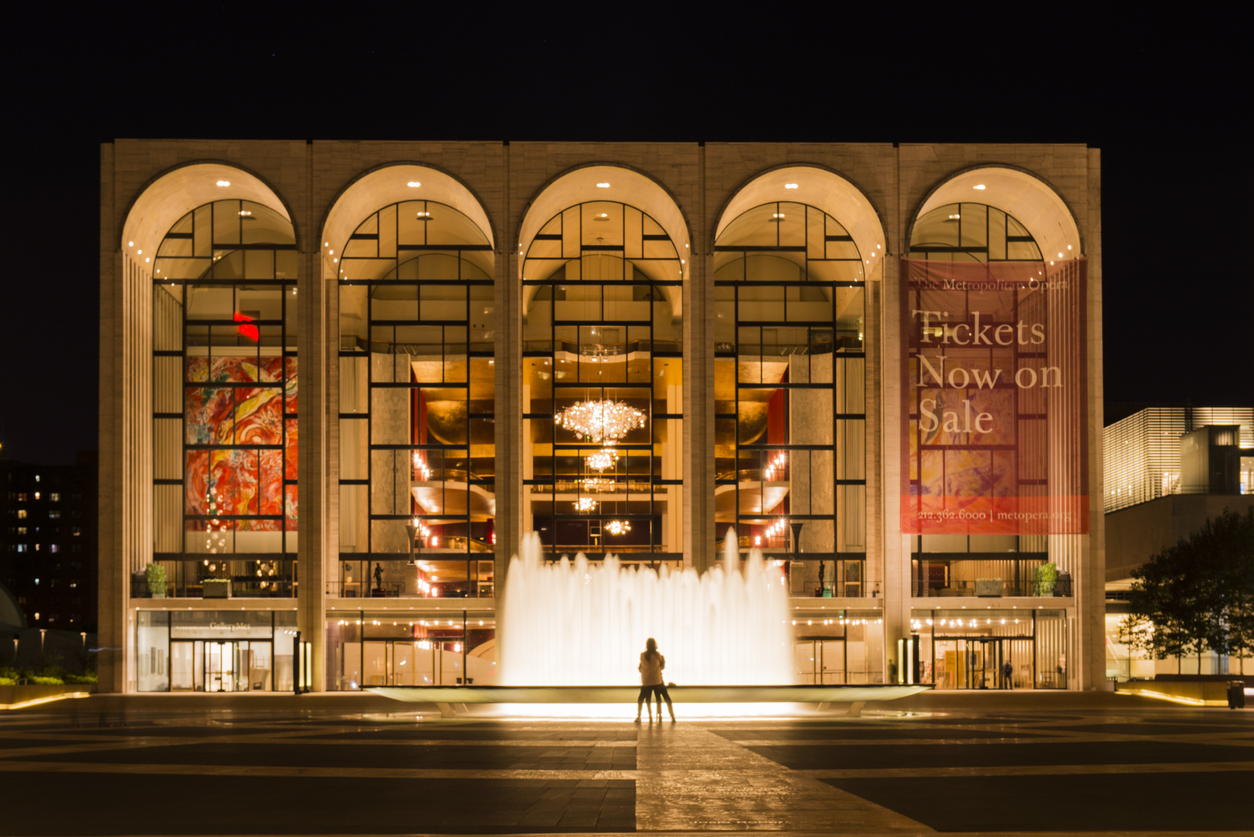
In designing the auditorium, Harrison and his team needed to allow for more seats than the old house while achieving better sightlines and equally good acoustics. On May 14, 1959, President Eisenhower turned over the first shovel of earth on the site of Lincoln Center as part of a groundbreaking ceremony that featured representatives of the Met, the New York Philharmonic (including Leonard Bernstein), the Juilliard School, and the New York city and state governments. Although west–east roads do not run through Lincoln Center itself, the Metropolitan Opera House is parallel to the block from West 63rd Street to West 64th Street.
The Metropolitan Opera has always engaged many of the world’s most important artists. Christine Nilsson and Marcella Sembrich shared leading roles during the opening season. In the German seasons that followed, Lilli Lehmann dominated the Wagnerian repertory and anything else she chose to sing. In the 1890s, Nellie Melba and Emma Calvé shared the spotlight with the De Reszke brothers, Jean and Edouard, and two American sopranos, Emma Eames and Lillian Nordica. Enrico Caruso arrived in 1903, and by the time of his death 18 years later had sung more performances with the Met than with all the world’s other opera companies combined.


No comments:
Post a Comment